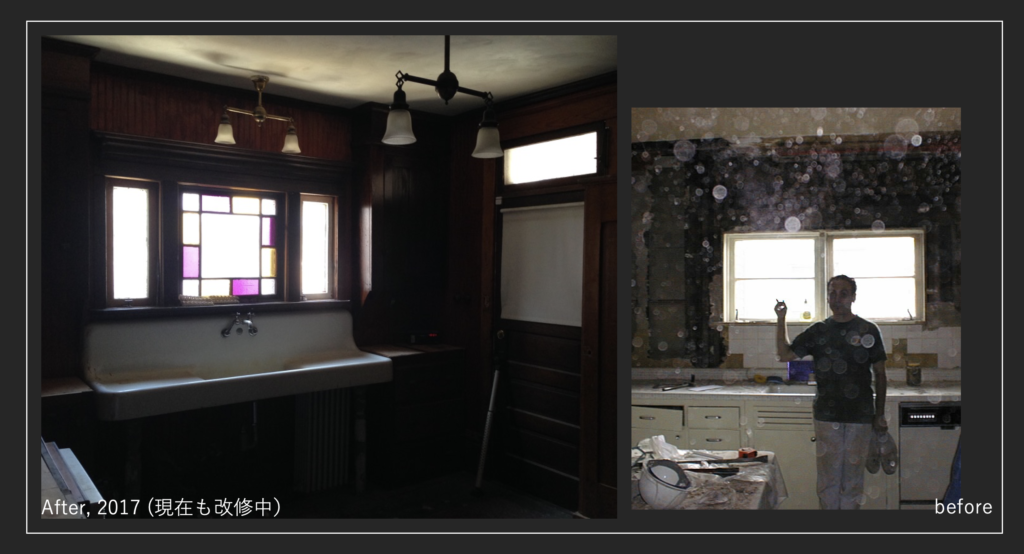
In this episode Tom talks about his own history with DIY work, relating it to his various careers as a musician, illustrator, and his work now in preservation. He tells a story about his first experience with someone who would buy and then fix up old houses and how that idea stuck with him to the point that when he decided to switch his career focus away from music, he again picked up the restoration work that he had done earlier as a hobby and applied himself to it in earnest. He also discusses how DIY work is often a matter of trial and error, where one learns as they go.
Host Ryuta mentions having lived in an older home during his time in Urbana and his familiarity with the DIY work his landlords did. They also discuss the difference between work that one can reasonably do themselves and the types of things one might want to hire a professional for
DIY Culture, the gendered aspects
Host Mugiko asks about DIY culture in the US and its ties to US culture mentioning, in particular, the gendered aspects of it. Tom agrees that at least in the sense of construction and fixing things around the house, DIY is generally thought of as a male activity, although that notion has been changing as gender roles themselves have changed over the years although DIY culture overall doesn’t only imply heavy construction or fixing machinery, it also covers craft projects, cooking, and other more activities associated with domestic work.
PACA’s architectural warehouse, to share knowledge, skill, and history
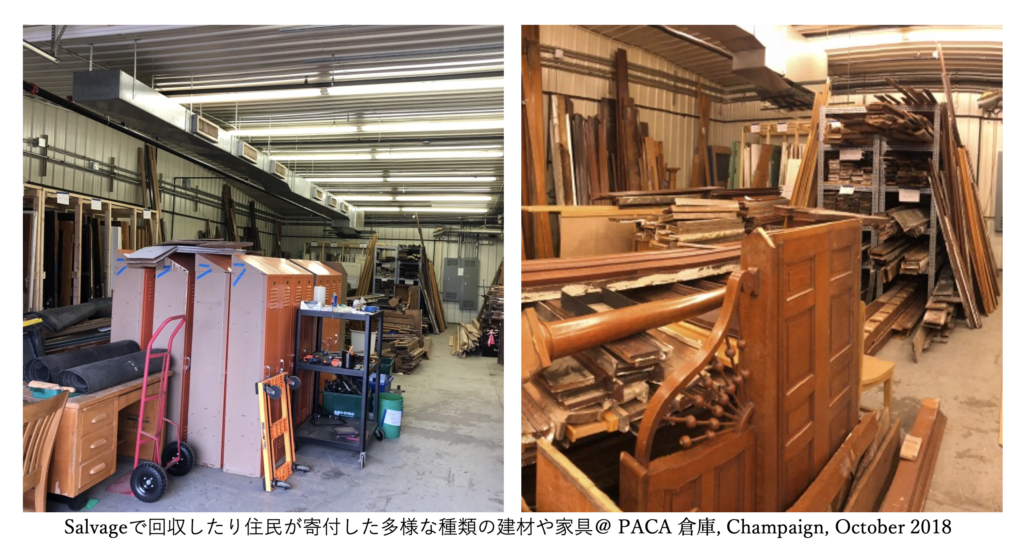
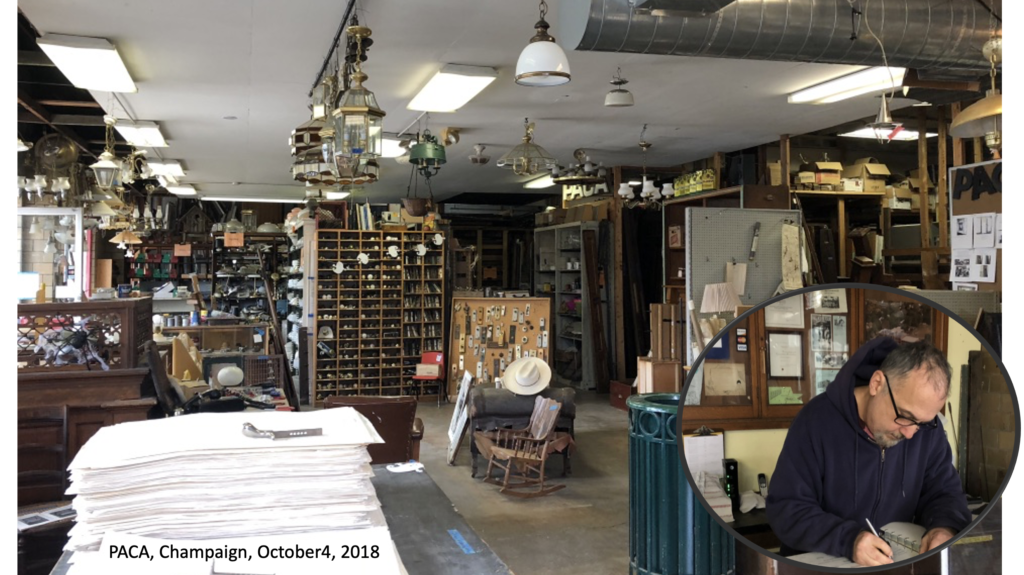
Tom mentions PACA’s educational pursuits and talks a bit about how he tries to create opportunities to teach people how to fix things for themselves so that shopping at PACA’s architectural warehouse can also be a learning experience for those who are interested. He mentions that they also strive to educate people about preservation generally, from telling customers about the history of the specific items they are interested in, to discuss how all of these sorts of things were used in older homes and how they might still be useful, or how they might be altered to be useful in a more modern setting.
Host Ryuta mentions the similarity between the teaching of DIY pursuits as related to old house items and the groups that do ‘Maker’ events. People who get together to work on fixing and making electronic items. Tom agrees about this similarity and discusses the need to help older people regain their curiosity and willingness to tinker with unfamiliar things and learn how they work.-Tom

2018-1024x553.png)
2018-1024x579.png)
2018-1024x567.png)